
Directed by
Barry Levinson
147 minutes
Rated MA
Reviewed by
Bernard Hemingway

Sleepers
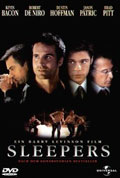
The first half of this overlong film is essentially a preamble to the main event which, proportionally speaking. is under-represented. That preamble is delivered largely by narration and with the exception of Robert DeNiro, none of the marquee cast appear in it. Both DeNiro and Dustin Hoffman, actors whose best work was behind them (both would star in Levinson’s next film, the Hollywood satire, Wag The Dog. 1997), have relatively small parts with Hoffman in particular going to waste in a part that promises much but delivers little. Brad Pitt was on the way up, Billy Crudup was making his feature film debut, Jason Patric had probably the most high profile role of his career, cult favourite Kevin Bacon plays a particularly nasty child molester and Minnie Driver is thrown into the mix as the token female. It is, in other words, a grab bag of familiar elements given a high end varnish for a mainstream audience.
The story is based on a novel by Lorenzo Carcaterra and is set in New York's Hell's Kitchen, a working class section of Manhattan and home to crime boss, King Benny (Vittorio Gassman). The film opens in 1966 as Lorenzo (Patric) tells us about himself and his friends, Michael (Pitt), John (Ron Eldard) and Tommy (Crudup), street kids with an appetite for misbehaving who were sent to reform school after one of their pranks goes horribly wrong. There they are systematically abused by a guard, Nokes (Kevin Bacon), and his cohorts. Flash forward to 1981 and Lorenzo is a reporter working for the New York Daily News. Michael (Pitt) is an attorney for the D.A’s office and John and Tommy are small time crooks going nowhere and caring less. John and Tommy accidentally come across Nokes eating in a restaurant and shoot him dead on the spot in front of witnesses. Michael takes the prosecution’s case and uses the trial to bring the history of the school to light. Hoffman plays an alcoholic lawyer on his druthers who as the defence attorney, is really Michael’s stooge. DeNiro is the modern day Bells of St Mary's parish priest.
There is no opening credit to the effect that the story is “based” on true events but there is a denial in the end titles of the film from the government departments then responsible for juvenile incarceration that physical abuse of the kind we see ever took place. Like, sure, tell it to the hand. This aspect of the film is quite candidly handled .
Unfortunately the hijacking of court proceedings and the parallel destruction of Nokes’s fellow abusers leaves the film unduly invested in overly neat mainstream Hollywood narrative conventions. Equally, the moral dilemma of Father Bobby as the priest who must choose whether to utter a “good lie” or not is too easily glossed over. Only DeNiro’s gravitas makes it work. At the other end of the spectrum Pitt is far too cool to make the role of the revenge-driven Michael carry any force whilst the film’s closure is particularly anodyne.

Want something different?


