
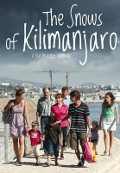
France 2011
Directed by
Robert Guediguian
107 minutes
Rated PG
Reviewed by
Bernard Hemingway

Snows Of Kilimanjaro, The (2011)
An opening title tells us that Robert Guediguian’s latest film is freely adapted from a Victor Hugo poem ‘Les Pauvres Gens’ translated here as ‘How Good Are The Poor’. It is a brave move that comes close to failing as at times 19th century sentimentality sits uncomfortably with 21st century pragmatism.
Guediguian assembles his usual team of players, notably Ariane Ascaride, Jean-Pierre Darroussin and Gérard Meylan to explore the viability of traditional Leftist values in our globalized consumer capitalist culture. Darroussin plays Michel who, with his wife Marie-Claire (Ascaride) was a committed socialist in his youth. Now in their fifties they live a comfortable life, he a welder in the Marseilles’ shipyards and she a housekeeper for the elderly. Michel is a union official and when it falls to him to conduct a ballot to select workers to be made redundant he puts his own name in the draw and so becomes one of the unemployed. Life goes on but the couple are robbed violently and when Michel discovers that one of the perps was a fellow worker they must examine their commitment to their socialist beliefs.
Social realist films, whether they be by Ken Loach or Luchino Visconti have a tendency to sentimentalize the underdog. Guediguian’s sentimentality is less to do with winning sympathy for a cause than a directorial tendency to underline his significant points with a meaningful shot held too long, a significant look made too obvious and so on as he builds his characters and their extended family and circle of friends prior to the main event. Once however the robbery and Michel and Marie-Claire’s subsequent crisis of faith kicks in there is enough strong material here that these kinds of obvious manipulations tend to drop away (even if at times they are replaced by overly literate dialogue) as Guediguian insightfully captures the contradictions of the couple’s position and the complexities of real life as they come to understand more about the young man who seemingly is entirely in the wrong.
Much of the strength of the film stems from Guediguian’s core film-making elements – the Marseilles locations, the depiction of ordinary people’s lives, the performances of his repertory players (Darroussin and Ascaride had already played husband and wife in Marie-Jo And Her Two Lovers (2002) with Meylan as the third party).
In concluding his tale Guediguian stays true to the spirit of Hugo’s poem in which a poor woman takes in the children of a dead fisherman as he affirms that socialist values still have a place in today’s world. It is a bold, and many would say romanticized view but one that gives hope and that is very much the director's purpose..
FYI: The title refers not to Ernest Hemingway’s adventure-romance novel or Henry King’s 1952 film but to a 1966 French pop song 'Les neiges de Kilimandjaro’ by Pascal Danel which is nicely integrated into the narrative here.

Want something different?


