
Directed by
Barry Levinson
125 minutes
Rated MA
Reviewed by
Bernard Hemingway

Disclosure
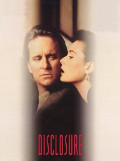
In its day Disclosure was touted as the first movie about the sexual harassment of men by women in the workplace. Perhaps in the best-selling novel by Michael Crichton on which it was based, the topic was explored with the balanced consideration it deserved but in Barry Levinson’s adaptation it is turned into a slick and sexy potboiler with a last act that is so schematic as to be incomprehensible.Michael Douglas dials down his smooth operator persona to play Tom Sanders, a Mr Middle America who lives in the manicured suburbs of Seattle with his wife (Caroline Goodall) and two kids. He is a division manager at an IT company that is developing next level virtual reality applications. Things are going so well that he is expecting a substantial promotion and endowment of stock options in a forthcoming $100m merger. He is knocked off his perch when the company’s owner (Donald Sutherland) gives the job to Meredith Johnson (Demi Moore) a sexpot with whom he had had a torrid relationship some years in the past well before he was married. The day she starts the job she invites Tom up to her office and tries to rape him. “Get behind me, Satan” (well, actually just “No” many times over) he cries as he manages to pull out of her clutches just short of penetration (a decision which will lead somewhat later to Tom telling his wife that he “never had sex with that woman”). Meredith charges him with sexual harassment, he counter-charges the same and the company manoeuvres to avoid a share-price-damaging scandal.
All this is delivered with meretricious style by noted English cinematographer Tony Pierce-Roberts who makes good use of the corporate offices where much of the film is shot to suggest an Escher-like entrapment. He also makes good use of Moore, particularly in the alleged rape scene (Moore’s best acting in the film)which turns into a mini demolition derby as Meredith and Tom revisit their lusty past.
The latter goes well beyond what anyone would call sexual harassment but clearly we needed more than Tom casually patting the bottom of his Asian secretary to justify the high-stakes confrontation that is the film’s main agenda. Whilst the war between the sexes material is well-handled the question one can’t help but ask is why the hyper-ambitious Meredith would even bother. There are some throw-away lines about sexual harassment being about power not sex but it would have been better if this idea had been explored in more depth.
Instead, the film not only makes Meredith a pathological mega-bitch who gets slam-dunked by Tom and his post-feminist sexy-in-her-own-right lawyer (Roma Maffia) but then, in typical thriller fashion (but nothing like the real world) the narrative takes off on a egregiously unnecessary and largely silly final act that makes sure that Meredith will never be able to threaten Tom, career and marriage restored, again.
Disclosure is the kind of phallocentric film that feminists understandably love to tear to shreds but it’s also narratively glib, whilst what in 1994 might have looked like state-of-the art hi-tech is far-from-impressive today.

Want something different?


