
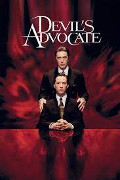
Directed by
Taylor Hackford
122 minutes
Rated MA
Reviewed by
Bernard Hemingway

The Devil's Advocate
Al Pacino has more than his fair share of films to apologise for however Taylor Hackford's The Devil's Advocate should be on his short list.
Keanu Reeves plays Kevin Lomax, a young high-performing Florida attorney who has never lost a case. He is head-hunted by a big-time New York law firm and with his wife, Mary Ann (Charlize Theron) relocates to an all-expenses paid Manhattan townhouse. We know this is going to be too good to be true.
The Devil's Advocate starts off in John Grisham mode promising to be a journey through the elegantly soulless world of high stakes corporate law and the price it extracts from its practitioners (and in a literal sense, its clients) as seen through the eyes of Reeves’s provincial babe-in-the-woods. It follows a familiar trajectory as Kevin starts working all hours and Mary Ann is feeling neglected in her role of trophy wife. The tone starts to change when Kevin gets a case defending a goat-sacrificing Muslim (Delroy Lindo) and Mary starts having nightmarish hallucinations. Clearly we are no longer in Kansas. Enter the firm’s owner, the graciously chipper, chuckling John Milton (Pacino) a.k.a The Prince of Darkness who needless to say has plans for Kevin and gradually the film changes tone on the way to full-blown supernatural horror realized in an all-stops-out ending.
The main problem with The Devil's Advocate is that Hackford has packaged a B-grade story with A-grade production values (well, except for the scene in which Reeves and Pacino walk through Manhattan streets and all the pedestrians watch them) thus skewing our expectations. We deserve pulpy trash but we get, for the most part, over-stuffed M.O.R. blandness
Had Nicolas Cage been cast in the lead he might have brought some demented energy to it as he did to Vampire’s Kiss (1989) but Pacino too cynically for our liking (he can turn this sort of thing on or off at will and has many times) oozes Saturnine charm that morphs into bestial anger once he, of course, is bested by his redeemed antagonist. Had Tom Cruise been cast instead of Reeves, Kevin's over-weening ego might have been more convincingly established and a genuinely Faustian negotiation ensured but Reeves is too bland to carry this off. Of the leads only Theron provides much in the way of a performance but even so it’s no great feather in her cap. And, one may well ask does the film's ending make any sense once Kevin has see the truth?
FYI: John Milton was an 18th century English poet whose most famous poem 'Paradise Lost', is about man's expulsion from the Garden of Eden.

Want something different?


