
Argentinia 1988
Directed by
Fernando E Solanas
127 minutes
Rated M
Reviewed by
Bernard Hemingway

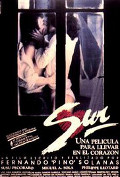
South, The
Director Solanas, a leading voice in Argentinian film in the 1970s and a promulgator of the concept of a political "Third Cinema", opposed to Hollywood on the one hand and European auterism on the other, and himself a one-time political exile, won Best Director at Cannes in 1988 with this poetic reflection on the cost of right-wing dictatorship in his homeland.
The film takes the form of a long night's wanderings through the streets of Buenos Aires by political prisoner, Floreal (Miguel Angel Sola) who has been freed after five years in jail.. During the evening his past and present come together.
Solanas uses a variety of theatricalised forms, musical, poetic and cinematic, flashbacks and dreams, to create an a-chronological portrait of Floreal's story. Whilst visually beguiling, almost too much so, with an attractive score by Astor Piazzola, particularly for an English-speaking audience with only the vaguest knowledge of the political and social context, it is a difficult film to engage with, not a little because of the extensive use of narration and long-focussed tableaux which keep us detached from the multiplicitous characters and events. Whilst this may mirror Floreal's subjectivity it also means that the film tends to seem locked in its aesthetically abstracted universe rather than offering much of immediate dramatic substance.

Want something different?


