
Directed by
Dave Filoni,
98 minutes
Rated PG
Reviewed by
Bruce Paterson

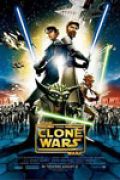
Star Wars: The Clone Wars
Synopsis: “As the Clone Wars sweep through the galaxy, the heroic Jedi Knights struggle to maintain order and restore peace.” That is, Anakin and his precocious new Jedi apprentice Ahsoka must endure limp battles, exchange snippy remarks and nicknames, and rescue Jabba’s kidnapped son.If you and your kids tuned into this after Play School, you (or at least they) might find it mildly entertaining in its own right. But sold as big screen experience, taking its place in the Star Wars cinematic canon, alongside Star Wars (1977) and The Empire Strikes Back (1980), this ‘3D CGI film’ is a space wreck. An insult. A sad mimicry. A spaceploitation of our ‘younglings’. Clone Wars magnifies all of the faults and shares few of the (already sparse) fillips of the Star Wars prequels released between 1999 and 2005.
But wait, let us start the Star Wars story properly…
It is a period of civil war.
Rebel spaceships, striking
from a hidden base have won
their first victory against the
evil Galactic Empire.
This is the famous scrolling text that started George Lucas’ Stars Wars (now in newspeak called Episode IV: A New Hope) in 1977, with its cracking story of an evil galactic empire, the death star, a princess with stolen plans. This was a film for children and adults alike. To paraphrase Douglas Adams, a film where men were real men (Harrison Ford), women were real women (Carrie Fisher), and large furry creatures from Kashyyyk were real large furry creatures from Kashyyykk (Chewbacca).
Star Wars was followed by two sequels of similarly successful space opera fantasy (although Return Of The Jedi (1983) was showing signs of slippage). All was well until George Lucas finally realized his dream of filming three prequels. The first two prequels in particular demonstrated that Lucas had lost his commitment to story over special effects and developed delusions of grandeur in the editing suite. They had little of the charm or wonder of the original trilogy, with clunky dialogue, an often confusing conflict over trade embargoes, tedious ‘comic relief’ characters, and spectacularly poor editing. When a professional film editor re-edited the DVDs of the first two episodes and released them on the internet, critics were amazed to find that (as Salon put it) out of nowhere appeared good films that had been hidden inside the disappointing originals. Gone were the redundant exposition and repetitive dialogue and even much of Jar Jar – in their place materialized a story that wasn’t half bad. To be fair, the final prequel Revenge Of The Sith did not share quite as many faults as its brethren, and was a reasonably stirring account of Anakin’s conversion to the dark side.
While all this is (I hope) interesting history, where does it leave Clone Wars? The film continues the story of the 2003 TV series of the same name, which featured about 30 traditionally-animated episodes of a few minutes each. The 2003 series, 2008 film and coming TV series depict events during the ‘Clone Wars’, set between the second and third prequel films. Confused? For the uninitiated, these are the wars between the evil Galactic empire’s forerunner (the Republic, protected by the Jedi Knights and an army of cloned soldiers) and the ‘Separatist’ droid armies whose various leaders are manipulated by the Republic’s own Chancellor for his nefarious ends.
Clone Wars gets down to business by omitting the famous scrolling text introduction, opting instead for a ‘dynamic’ 40s-radio-style voice-over and montage of images, a little Flash Gordon-ish in tone. Tellingly, this decision was made by Lucas because he felt the ‘crawl’ wasn’t as effective on television screens. While the new approach is a better stylistic device to introduce animated TV, Lucas’ decision draws attention to the fact that this animation was originally never intended for the cinema. And it shows.
On the large screen and in the large cinema, the visuals often look wooden and the audio sounds hollow. The director, who has made some excellent animated episodes of the TV series Airbender, fails to fill the larger space or tell a story simply and well. As it is, the confused morass often resorts to post-scene wrap-ups where characters muse about what just happened and what needs to happen next. The voice talent is highly variable, from the convincing efforts of the Star Wars film actors, Samuel L Jackson, Christopher Lee and Anthony Daniels in small speaking parts, to the merely adequate efforts of the new voice talent for Anakin, Ahsoka and Obi-Wan Kenobi. Oddly, Jabba’s uncle sounds exactly like Truman Capote.
The film’s greatest failing in the Star Wars mythology is that the animated Anakin obscures the troubled young man of the prequels who massacred men, women and children in vengeance for his mother’s death, the man who will later murder Jedi children in his transition to evil Darth Vader. But perhaps he will be driven to the dark side by the precocious Ahsoka, a slightly bizarre 13 year old caricature of Lara Croft. The end.

Want more about this film?


Want something different?


